
Materials Chemistry Figures: Preparation, Structure and Interfaces
Organize preparation, structure and interface behavior as distinct tasks. Connect their scales explicitly and keep measured results separate from illustrative mechanisms.
Prepare three information layers
List the synthesis or processing route, the structure to be explained and the application or interface relationship. Mark which layer needs a structural source and which needs measured evidence. Use a legend to keep material identity stable through changes in scale or view.
Compare routes with a shared starting point
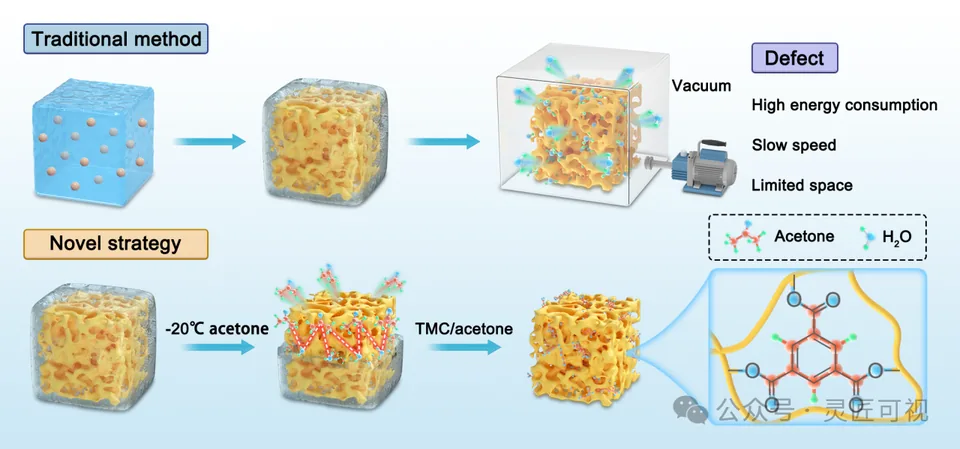
The polyelectrolyte monolith archive uses upper and lower porous blocks in comparable views. One route includes a vacuum setup; another shows solvent treatment and crosslinking. A local network inset connects macroscopic shape to chains and junctions.
Distinguish processing from structural comparison
The protein nanofiltration membrane figure follows nucleation, assembly, transfer and crosslinking before comparing membrane surfaces and pores. Keep temporal arrows and paired comparisons visually distinct. The catalytic-interface case instead gives a support, selected sites and molecules different spatial roles.
Use local enlargement with a reference
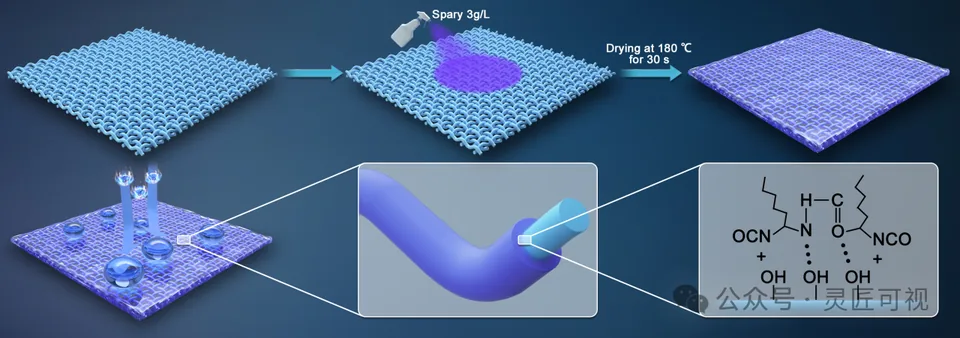
Connect each inset to its parent object. State when a pore, network or surface is schematic rather than measured geometry. Do not infer a physical scale bar from a decorative 3D model. Retain crystal or molecular provenance where the structure is data-derived.
Prepare a reviewable final file
Check labels, colors, reaction or flow roles, evidence status, image permissions and target dimensions. Preserve the editable source and actual export. For related preparation see mechanism planning, color roles and paper-figure services.
Sources and scope
Sources apply within their stated scope. Archive records describe existing work; international account access and checkout remain closed.
Choose the next step
Understand the platform · Scope a design commission · Contact support