
Choosing a Review Figure Layout: Circle, Matrix or Panels
Choose the layout by whether the reader must classify, compare or follow a process. Reduce competing information levels before reducing type size.
Identify the reader’s task
Classification groups related items. Comparison examines the same criteria across items. A process follows changes or stages. A single figure can contain more than one task, but each region should make its own task identifiable.
Compare the same placeholder content
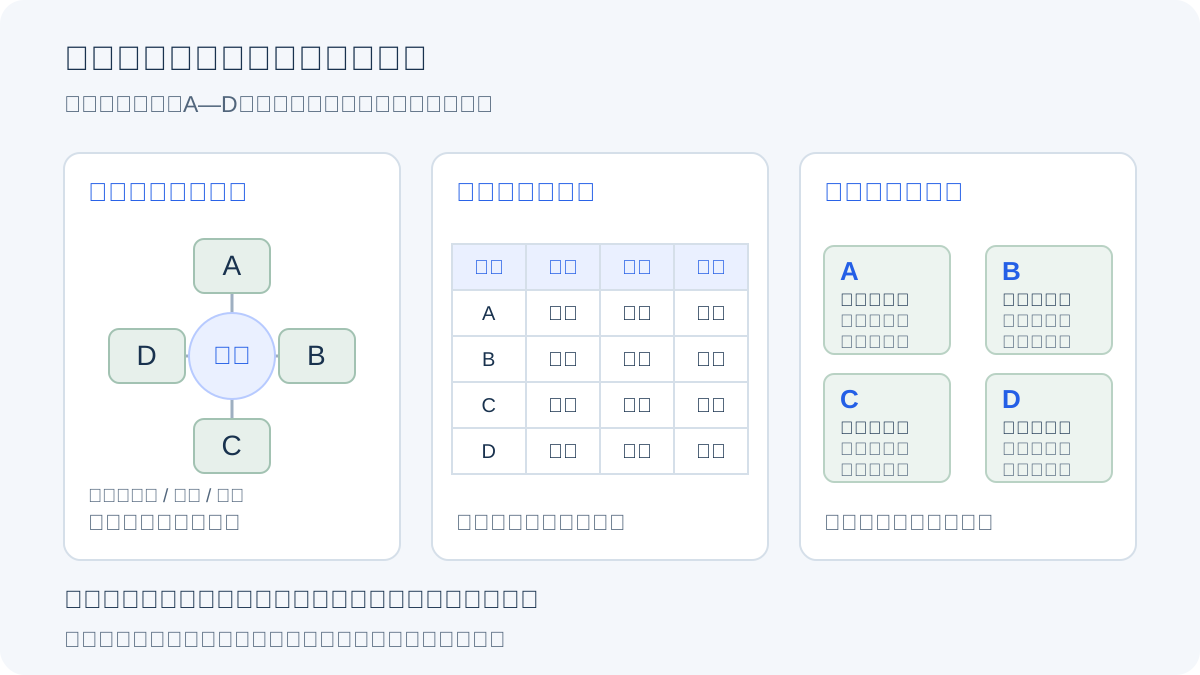
Take a membrane topic with three information roles: structure, design strategies and applications. A circular version may put structure at the center and strategies around it. A matrix needs consistent comparison criteria for every strategy. A panel version can give structure, strategy and application separate reading areas. These are teaching alternatives, not new performance data.
| Layout | Advantage for the task | Failure to watch for |
|---|---|---|
| Circular | Common topic and related categories | Unrelated hierarchy levels treated as equal sectors |
| Matrix | Repeated criteria | Incomparable rows or empty cells hidden by decoration |
| Panels | Separate levels or questions | No explicit order or cross-panel identity |
Read the PDMS archive as a hierarchy
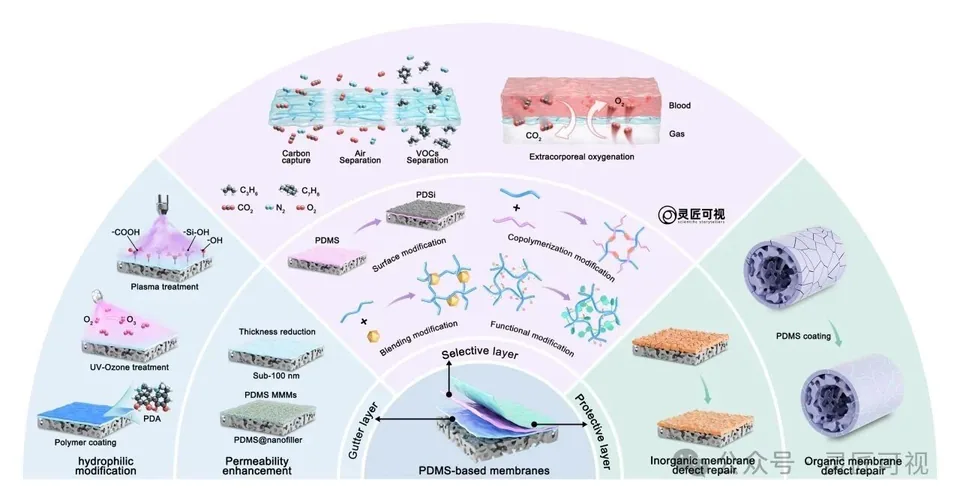
The semicircular PDMS figure locates the base membrane near the center, modification strategies in sectors and applications outside. Copying the outline without preserving those roles can obscure the review's logic.
Remove or split before shrinking
Mark duplicated labels, subsidiary pathways and content that can move to the caption. If two regions answer unrelated questions, separate them into panels or figures. Test the longest text and smallest objects at final size after each revision.
Continue with the review tutorial, circular tutorial or online workflow.
Sources and scope
Sources apply within their stated scope. Archive records describe existing work; international account access and checkout remain closed.
Choose the next step
Understand the platform · Scope a design commission · Contact support